
What Iowa municipalities need to know about federal grant changes
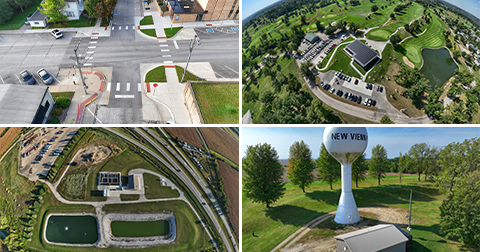
Federal grants for Iowa cities help communities move important projects forward – from water and wastewater improvements to streets, bridges, public facilities, disaster recovery and community development. For many municipalities, especially smaller communities with limited local resources, federal funding can be the difference between a project that moves ahead and one that stays on the wish list.
That is why proposed U.S. Office of Management and Budget (OMB) Uniform Guidance changes deserve attention.
The U.S. OMB has proposed updates to 2 CFR Part 200, the federal grant rules that guide how funding is awarded, managed, documented and reviewed. These rules affect direct federal grants and pass-through federal funding administered by state agencies and other partners.
The proposed effective date is October 1, 2026, and changes would apply to new awards, as well as new incremental funding actions in connection with existing awards, on or after that date.
For Iowa municipalities that could be looking for federal funding, the time is now and the details matter.
Why federal grant compliance matters for Iowa municipalities
Many Iowa cities rely on federal or federal-pass-through funding for infrastructure and community projects. That may include transportation funding, CDBG programs, USDA Rural Development, FEMA assistance, EPA-related programs, water and wastewater funding, housing programs or competitive infrastructure grants.
If the federal grant compliance rules change, cities may need to adjust how they evaluate grant opportunities, prepare applications, document project decisions and manage awards after funding is approved.
Common federal funding sources for Iowa municipalities
| Funding area | Common municipal use | Why cities should pay attention |
| Water, wastewater and stormwater | Treatment plants, sewer improvements, water mains, flood mitigation and drainage work. | Utility projects often depend on layered funding, local match and reimbursement timing. |
| Transportation | Streets, bridges, trails, sidewalks and safety improvements. | Federal-aid projects already include detailed compliance, documentation and coordination requirements. |
| CDBG and community development | Public facilities, downtown improvements, housing, infrastructure and community services. | Smaller cities often rely on pass-through funding to complete projects that would be difficult to fund locally. |
| USDA Rural Development | Water, wastewater, public facilities and rural infrastructure. | Many rural Iowa communities use USDA funding to make essential projects more affordable. |
| FEMA and disaster recovery | Emergency response, mitigation, repairs and recovery projects. | Documentation, eligibility and timing are especially important after a disaster. |
| Competitive infrastructure grants | Large-scale infrastructure, resiliency, safety or community improvement projects. | Changes to award terms or compliance rules may affect how cities evaluate risk before applying. |
What OMB's Uniform Guidance changes could mean for Iowa municipalities
The full impact will depend on how the final rule is written and how individual agencies apply it. Still, Iowa municipalities should pay close attention to several practical concerns.
Award certainty
Cities often make local decisions based on expected grant funding. That can include engineering agreements, local match commitments, project schedules, bid timing, bond planning and coordination with other funding sources.
Perhaps the most structurally significant change is the introduction of a mandatory pre-issuance political review for all discretionary awards. This new pre-issuance review layer introduces a political checkpoint in the award-selection process.
If federal agencies have broader discretion to suspend, delay or terminate certain awards, cities may face more uncertainty after a grant is awarded. That is especially important for competitive grants or discretionary programs where project development costs may begin before every funding question is fully resolved.
Administrative burden
Grant compliance already requires time, coordination and careful documentation. Additional requirements could make grants harder to manage, especially for communities that do not have dedicated grant staff. Even small changes to reporting, procurement, certifications or documentation can create real workload for a city team.
If finalized as proposed, these changes would have meaningful implications for all recipients of federal financial assistance. The shift from guidance to binding regulation would elevate compliance risk and could reduce overall flexibility in interpreting and implementing federal requirements.
Reimbursement and project delivery risk
Many grant-funded projects require cities to spend money before reimbursement. If rules change after a project is underway, or if an award is delayed or suspended, cities may need to manage cash flow, contract obligations and local expectations while waiting for clarity.
That risk can be significant when a city has already committed local match, approved a project schedule or coordinated grant funding with utility rates, bond proceeds or other funding sources.
One of the most significant areas to monitor is proposed authority for federal agencies and pass-through entities to suspend or terminate awards. The proposal would allow termination when an award no longer supports program goals, agency priorities, or the national interest, and would also introduce a temporary suspension mechanism.
Smaller communities may feel the most impact
Cities do not need to wait for a final rule to start preparing. A few practical steps can help communities understand their exposure and respond intentionally. Larger cities may have more staff capacity to absorb changes in federal grant administration. Smaller cities may not.
In many Iowa communities, one person may be responsible for finance, council packets, public notices, grant reporting, payroll and project coordination. Additional federal compliance steps can create a disproportionate burden for communities that already operate with lean staff.
How Iowa municipalities can prepare for federal funding changes
Cities do not need to wait for a final rule to start preparing. A few practical steps can help communities understand their exposure and respond intentionally.
| Review active grants | What to do | Why it matters |
| Review active grants | Identify federal grants, pass-through awards and pending applications. | Cities need a clear picture of where federal rules may affect projects. |
| Check future project plans | Look at projects that may rely on federal grants for Iowa cities, including infrastructure, public facilities and disaster recovery. | Upcoming applications may need more planning around match, eligibility, and compliance. |
| Document local impacts | Note how added requirements, funding delays or award uncertainty could affect staff capacity, budgets, utility rates or schedules. | Specific examples are more useful than general concerns. |
| Talk with funding partners | Coordinate with grant administrators, engineers, regional planning agencies, councils of governments, auditors and state program contacts. | Federal grant management often depends on a strong project team. |
| Review project commitments | Look at local match, contracts, bid timing, reimbursement schedules and backup funding sources. | Cities should understand their exposure before costs are committed. |
| Share feedback | Provide examples to the Iowa Association of Councils of Governments, League of Iowa Cities or similar organizations gathering municipal input. | Local experience can help shape comments before the federal deadline |
What municipal leaders should ask
As Iowa municipalities review active grants and upcoming projects, a few questions can help guide the conversation to help leaders understand how federal grant changes may affect local decision-making:
- Which projects depend on federal or pass-through federal funding?
- Are any applications pending or planned in the next 12 to 24 months?
- Does the city have enough staff capacity to manage added grant compliance?
- Could a delay, suspension or termination affect contracts, local match or project schedules?
- Are reimbursement timelines creating cash-flow risk?
- Does the city have documentation to show how proposed changes could affect local projects?
The bottom line
The proposed OMB Uniform Guidance changes are not a reason to stop pursuing grants. They are a reason to pay attention, ask good questions and plan carefully. Cities that understand their funding exposure, document local impacts and coordinate early with their project team will be better prepared to manage whatever comes next.
Fehr Graham's funding team works with communities to identify grant opportunities, prepare applications, coordinate funding strategies and manage project documentation. If your municipality has active federal grants or upcoming projects that may depend on federal funding, now is a good time to review your grant portfolio and make sure your community is prepared.
To learn more about how Fehr Graham can help your community secure grants, contact us or call 815.235.7643.
 |
Fehr Graham Senior Community Development Specialist Bridgette Stocks serves as the principal contact for all funding-related programs, navigating complicated rules and regulations to secure maximum dollars. She is a vital partner when it comes to strengthening communities to provide resilient and critical infrastructure. Her success speaks for itself – she has secured more than $200 million for Fehr Graham clients. She can be reached at |
